
carbonnature.com

Our Project

Carbon Nature

How we Work

Realizing Indonesia’s climate resilience through innovative nature-based carbon solutions, local community empowerment, and accelerating a transparent and sustainable low-carbon economic transition.

Project Deal

Initial consultation to determine project parameters and measurable carbon emission reduction targets

Planning

Development of a comprehensive blueprint that integrates natural solutions with environmentally friendly technology.

Execution

Field work is carried out by experts under strict supervision to ensure that ‘Green Industry’ quality standards are met.

Our Project

Logo Green Waqf Initiative - Carbon Nature

Green Waqf Initiative

Is Carbon Nature’s flagship program, positioning us as a pioneer in synergizing permanent endowment instruments with modern climate science in Indonesia. Through the LEGACY “Land Endowment for Green Action and Circular Economyˮ framework, ...
See Detail Project

See Our Project

Addressing the Threats of Global Warming and Forest Destruction: Carbon Nature and UGM Encourage Elementary School Students to Plant Trees for the Earth – At KHDTK Blora
30 Sep

Addressing the Threats of Global Warming and Forest Destruction: Carbon Nature and UGM Encourage Elementary School Students to Plant Trees for the Earth – At KHDTK Blora

The Threat of Global Warming and Forest Destruction Getas-Ngandong, September 20, 2025 – Global warming is becoming increasingly urgent with
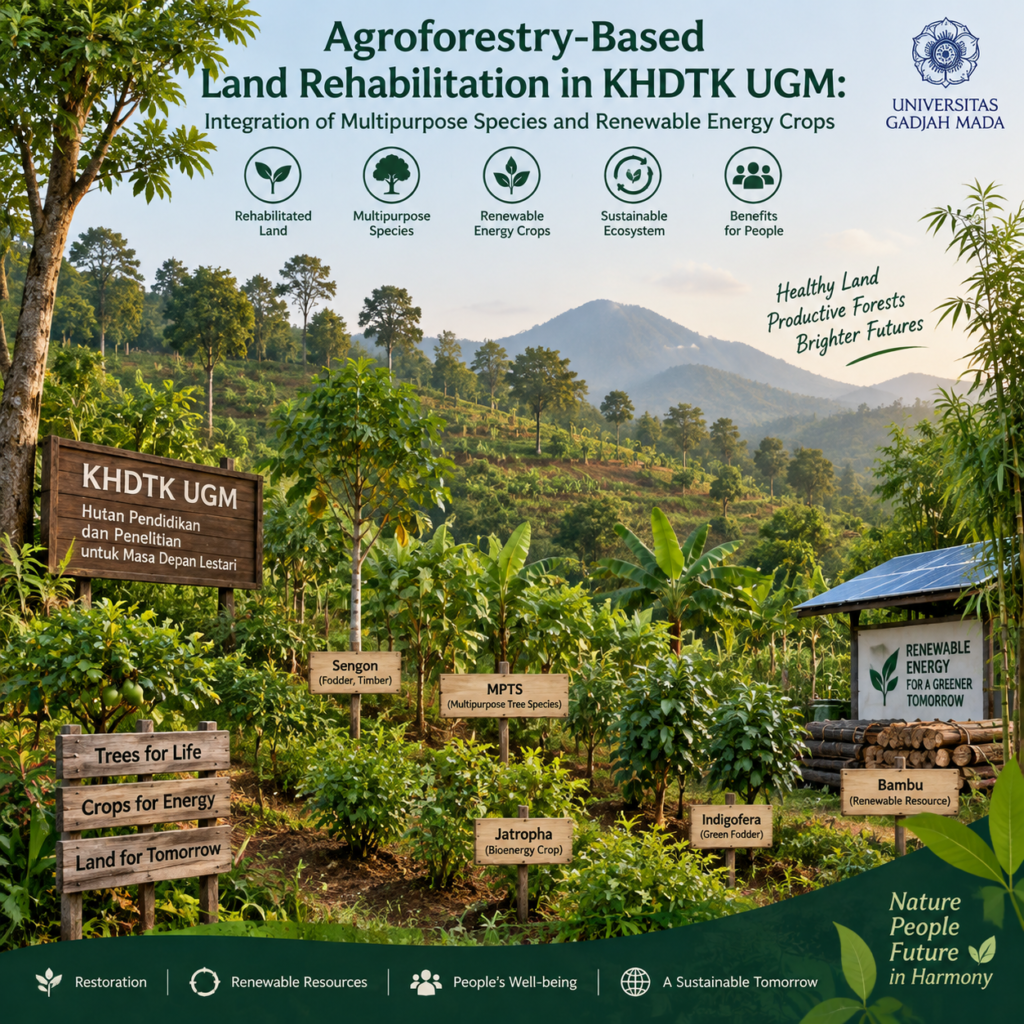
Our Jurnal

Authors: Fitra K. Tegar, Louis B. R. Wijanarto, Muhammad A. Noor, Lutfiyyah Roihanah, Angelina N., Helga Monica, and Hermudananto.

There is currently a problem of land degradation in Indonesia, requiring the rehabilitation of over 12.7 million
hectares. Agroforestry has been considered one of the most effective strategies for restoring ecological functions while providing socio-economic benefits to local people. The purpose of this study was to develop an agroforestry-based land rehabilitation strategy for Compartment 5 of KHDTK at Universitas Gadjah Mada, located in Ngawi Regency, East Java, Indonesia, using the CASM model. This study involved assessing both biophysical and socio-institutional. 
Read More ….