

In a global landscape that increasingly emphasizes climate action, Indonesia is taking major steps to strengthen its position in the international carbon market. The government, through the Ministry of Environment, has signed a series of strategic partnerships and published certification guidelines. This initiative opens up new opportunities while demanding technological readiness, regulations, and domestic project participants.
1. Why is Indonesia Entering the International Carbon Arena?
- Indonesia has great potential in the Forestry and Other Land Use (FOLU) sector, forests, peatlands, mangroves — which have long been natural carbon sinks.
- The government aims to use Carbon Economic Value (NEK) as an instrument to make climate mitigation an economic driver.
- For Indonesian carbon credits to be accepted in the global market, national regulations must be compatible with international standards to avoid market access restrictions or doubts about credit integrity.
- A Mutual Recognition Agreement (MRA) is an important mechanism for credits recognized in Indonesia (SPEI) to be “recognized” by international schemes, or vice versa — facilitating global market integration.
2. Strategic Steps Taken
2.1 MRA with Verra (VCS)
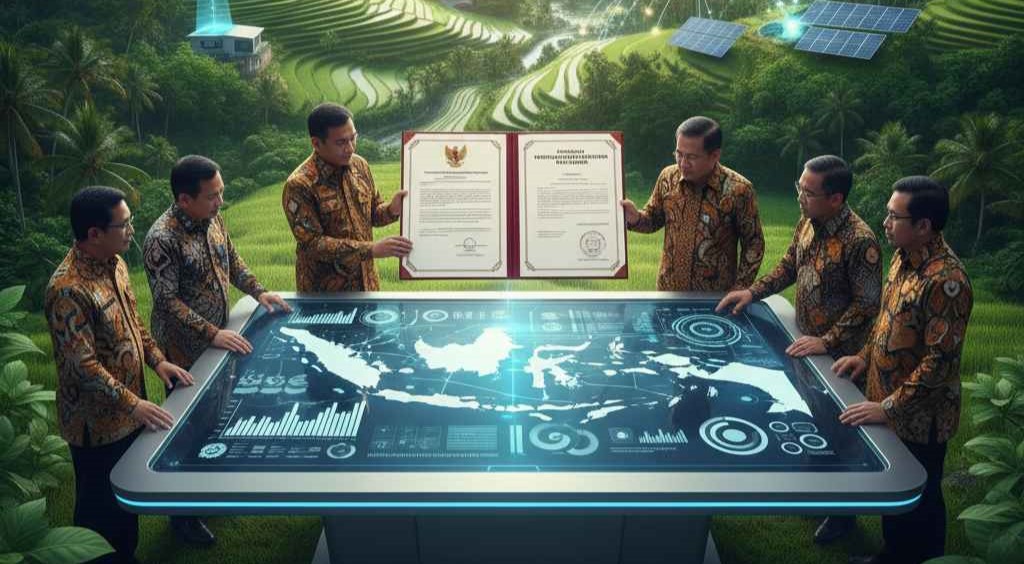
Indonesia and Verra have agreed on mutual recognition between SPEI and the Verified Carbon Standard (VCS). This agreement allows projects using VCS methodologies to be integrated into Indonesia’s national registry (SRN-PPI). EcobizAsia+2https://indonesiabusinesspost.com/+2 This allows Indonesian carbon producers to sell credits that are recognized in the Verra market and recorded in the national system.
2.2 LoI with Puro.earth
The government also signed a Letter of Intent (LoI) with Puro.earth for the use of industry-based methodologies (technology-based). This expands the scope of mitigation actions to the industrial and technology sectors, not just nature.
2.3 GS4GG Certification Guide
A special guidance document has been published for project developers who wish to use the Gold Standard for Global Goals (GS4GG) in order to comply with national regulations. This facilitates the dual certification process so that projects remain compliant with both systems.
2.4 Previous MRAs: Global Carbon Council & Plan Vivo
Indonesia has entered into an MRA with the Global Carbon Council (GCC) to jointly recognize SPEI and the GCC scheme. globalcarboncouncil.com. Also with Plan Vivo, so that credits from Plan Vivo projects in Indonesia can become part of SPEI. planvivo.org
2.5 MRA with Gold Standard
MRA with Gold Standard was conducted on May 8, 2025 so that projects in Indonesia could use the Gold Standard methodology while remaining subject to national regulations. SSRN+3Gold Standard+3fairatmos.com+3
3. Statistics & Scope of Methodology
Minister of Environment Hanif Faisol Nurofiq said that the MRA increases opportunities for mitigation actions that can be quantified using:
- 58 methodologies in 2 sectors for nature-based approaches
- 54 methodologies in 3 sectors for a technology-based approach
In other words, projects in the natural and technological sectors have a valid certification pathway so that their credits can be traded internationally.
4. Challenges, Risks, and Opportunities
4.1 Challenges
- Registry synchronization: to enable the SPEI system and international scheme registries to integrate without duplication or conflict.
- Methodological suitability: some international methodologies are not directly compatible with Indonesian regulations and require adaptation or modification.
- Capacity of local project developers: many actors do not yet understand the complexity of international MRV (Measurement, Reporting, Verification).
- Foreign investor confidence: the market demands integrity, transparency, and strong governance so that credits are not “ghost carbon.”
4.2 Opportunities
- Access to global markets: Indonesian carbon credits can enter developed countries or international corporate buyers.
- Climate financing: capital flows to sustainable projects in Indonesia can increase.
- Premium pricing: internationally recognized credits can be priced higher.
- Equitable investment: opportunities for local communities, regional entrepreneurs, and MSMEs to participate in the carbon chain.
5. How Can Local Projects Participate?
- Select a certification scheme: GS4GG, VCS, Gold Standard, Plan Vivo, GCC, or a combination (dual).
- Register with SPEI and the national registry: so that credits have domestic recognition.
- Use methodologies that have been approved/adapted to the Indonesian context.
- Ensure MRV capacity and validation/verification by nationally and internationally recognized institutions.
- Integrate with other scheme registries via MRA so that credits can be exported.
- Transparent reporting and auditing to maintain market confidence.
6. Brief Case Study: MRA Verra & SPEI
In the MRA between Indonesia and Verra, credits issued through VCS (Verified Carbon Units / VCU) can be recorded in the SPEI system. Ecobiz Asia+2https://indonesiabusinesspost.com/+2. This step expands the credit market share from Indonesia to global buyers who adopt VCS. It also strengthens the branding of Indonesian projects as “credible” at the international level.
If you or your organization would like to participate in carbon transactions—as a project developer, validator, or landowner—Mutu Institute provides professional training related to greenhouse gas (GHG) accounting, certification methods (GS4GG, VCS, etc.), and carbon market integration.
Mutu Institute also has an NGO unit called Carbon Nature that focuses on assisting environmental projects, drafting carbon proposals, and advocating for projects in the region to obtain maximum benefits.

The MRA, LoI, and certification guidelines initiated by the government are not just symbols—they are the real foundation for Indonesia to enter the global carbon competition with credibility. This requires synergy between the government, project developers, certification bodies, and the private sector.
Register now for Mutu Institute training and get assistance from Carbon Nature to get your carbon project ready for the international market.