

Industrial – Indonesia’s diplomatic landscape entered a significant new chapter following President Prabowo Subianto’s meeting with Russian President Vladimir Putin at the Grand Kremlin Palace, Moscow. The bilateral discussion—held on December 10, 2025—reinforced Russia’s commitment to supporting Indonesia’s long-term vision for industrial competitiveness, strategic development, and cross-sector collaboration.
This article provides a comprehensive, structured, and engaging overview of the meeting. It highlights the geopolitical and economic implications, explores potential areas of cooperation, and contextualizes how Indonesia can leverage this momentum through capacity-building, industry-readiness, and sustainability initiatives.
Strengthening Indonesia–Russia Industrial Cooperation
President Vladimir Putin emphasized Russia’s readiness to become a strategic partner in Indonesia’s industrial transformation. During a livestreamed session monitored from Jakarta, he reaffirmed:
“If Indonesia decided to involve Russia, we always stand ready to offer our help.”
This clear signal positions Russia not only as an ally but as an active contributor to Indonesia’s industrial modernization goals—ranging from infrastructure and manufacturing to agricultural resilience.
Russia’s Offer: A Wide Range of Industrial Prospects
Putin noted several sectors where Russia sees promising prospects for collaboration, including:
- Industrial development and technology transfer
- Manufacturing innovation
- Agricultural modernization
- Infrastructure and machinery enhancement
- Energy and raw-material supply chain support
For Indonesia, these areas are critical to achieving long-term competitiveness, especially as global supply chains shift and new manufacturing hubs emerge.
Rising Bilateral Trade: A Positive Economic Signal
Economic cooperation between Indonesia and Russia continues to gain momentum. According to Putin, bilateral export–import activities increased by 17 percent in the first nine months of 2025. This growth reflects rising market confidence and improved economic channels between the two nations.
Addressing Trade Barriers
Putin expressed confidence that ongoing issues—including regulatory differences, logistical challenges, and payment mechanisms—can be resolved in the near future. The shared objective is to unlock a smoother, stronger, and more resilient trade framework.
Expanding Connectivity Through Tourism Cooperation
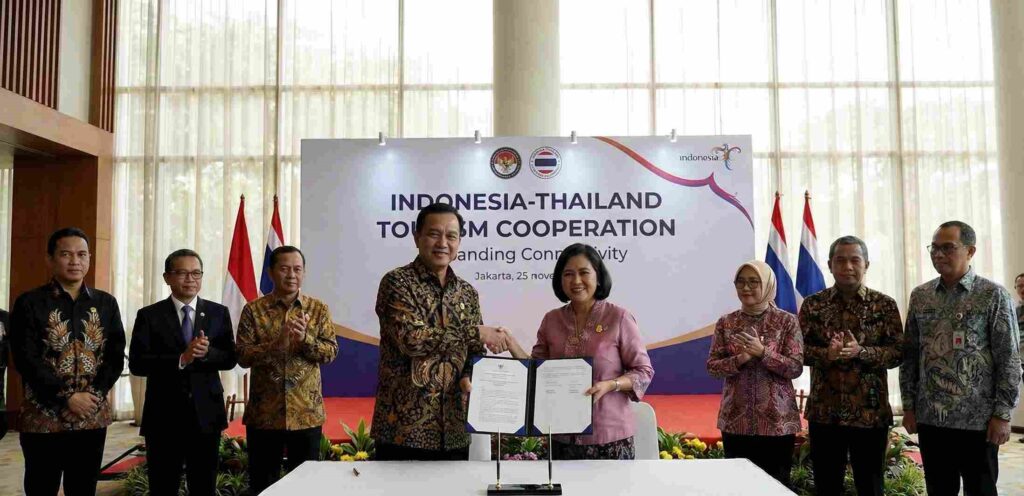
Beyond industry and trade, Indonesia–Russia relations are also strengthening in tourism. The number of travelers between the two countries continues to rise, encouraged by:
- Direct flight routes
- Visa-free travel arrangements
- Growing interest in cultural exchange and nature tourism
This expanded mobility supports both people-to-people connections and long-term economic cooperation.
Diplomatic Momentum: Prabowo’s Strategic Tour
President Prabowo’s arrival in Moscow at 10:50 a.m. local time marked a significant continuation of his diplomatic tour. The visit followed engagements with Pakistani leaders in Islamabad from December 8–9, reinforcing Indonesia’s active role on the global stage.
Key Indonesian officials accompanying the president included:
- Minister of Foreign Affairs Sugiono
- Cabinet Secretary Teddy Indra Wijaya
This meeting also followed a prior engagement at the St. Petersburg International Economic Forum (June 18–20), showing consistent diplomatic continuity.
Opportunities for Indonesia: Capacity Building, Standards, Governance, and Sustainability
Indonesia’s deeper cooperation with Russia unlocks new opportunities—but effective absorption of these opportunities requires strong capability development, regulatory readiness, and sustainability integration.
Industrial Competitiveness Requires Strong Standards
As Indonesia expands manufacturing, agriculture, and technology partnerships with global players such as Russia, it becomes essential for organizations, companies, and government bodies to strengthen their internal competence—particularly in:
- Industrial standards
- Governance and quality management
- Project readiness
- Safety and sustainability criteria
- International compliance frameworks
This is where professional training institutions play a pivotal role.
Why Training and Institutional Strengthening Matter
International cooperation brings growth, but also higher expectations. To stay competitive, Indonesian companies and institutions must strengthen their knowledge base—especially in global standards, sustainability management, and readiness for international collaboration.
Developing Indonesian Competence for Global Cooperation
Mutu Institute provides training, certification, and capacity-building programs designed to support Indonesia’s industrial and sustainability transformation.
Organizations preparing to engage with global partners—such as Russia—can benefit from Mutu Institute’s programs in:
- Quality management and industrial standards
- Sustainability frameworks
- Supply-chain readiness
- Corporate governance
- Agricultural and agro-industry standards
- Occupational health, safety, and environmental compliance
Mutu Institute ensures that Indonesian teams are not only capable, but globally competitive.
Sustainability as a Strategic Priority
As industrial cooperation expands, sustainability becomes a critical pillar. Environmental commitments—especially carbon reduction, climate resilience, and ecological protection—must accompany economic growth.
Climate and Nature Solutions
Carbon Nature, an NGO under the same ecosystem as Mutu Institute, provides programs and services focusing on:
- Carbon project development
- Nature-based solutions
- Mangrove and seagrass conservation
- Sustainability planning for organizations
- Community-based ecological programs
As Indonesia collaborates with global partners like Russia, incorporating sustainability strengthens national credibility, investment attractiveness, and long-term resilience.
Interactive Insight: What This Means for Indonesia’s Future
The Putin–Prabowo meeting signals several strategic implications:
- Indonesia gains a committed industrial partner with strong technological resources.
- Bilateral trade is expected to expand further.
- Tourism and cultural exchange will deepen.
- Indonesia must prepare its institutions, workforce, and industries to absorb new cooperation pathways effectively.
- Sustainability must remain at the center of all development initiatives.
For stakeholders, industries, policymakers, and professionals, this moment represents an opportunity to build capacity, strengthen international alignment, and accelerate progress.
Enhance your organization’s readiness for international cooperation—including industrial standards, sustainability, and governance excellence—through Mutu Institute’s professional training programs.
Strengthen your environmental and climate-action initiatives with support from Carbon Nature, our NGO dedicated to nature-based solutions and carbon-focused programs.
Prepare your team for global collaboration. Join Mutu Institute’s training programs today.
Advance your sustainability impact with Carbon Nature.
Stay connected with us for more insights, updates, and sustainability knowledge. Follow our official channels:
Instagram: carbonature_
YouTube: CarbonNature
Facebook: Carbon Nature
Website: www.carbonnature.com
For training inquiries, partnership opportunities, or direct assistance, contact us at:
Email: info@carbonnature.com
Phone/WhatsApp: 0819-1880-0012
We’re here to support your journey toward stronger sustainability performance and real climate impact.