

Indonesia’s energy transition journey toward a low-carbon future is progressing, but not without challenges that demand careful navigation. At the Tempo Energy Day event in South Jakarta on December 10, 2025, Satya Widya Yudha, Member of the National Energy Council (DEN), emphasized that Indonesia must adopt a phased and realistic approach to its energy transition—one that preserves affordability, ensures supply reliability, and strengthens national energy resilience.
This article explores Satya’s key points, the country’s current stance on fossil fuels, global financial barriers, and the urgent technological needs shaping Indonesia’s clean energy roadmap.
A Phased Energy Transition: Why Indonesia Chooses “Phase Down,” Not “Phase Out”
Since the Glasgow Climate Conference in 2021, Indonesia has faced international calls to end fossil fuel use by 2040. However, Satya clarified that the government has chosen a “phase-down” strategy, not a full phase-out.
“Indonesia is reducing fossil fuel usage while ensuring carbon emission targets are met,” he said.
This approach reflects Indonesia’s commitment to climate goals while maintaining energy stability. A rapid fossil fuel exit without sufficient renewable readiness could risk supply disruptions and economic pressure—two conditions the government is determined to avoid.
Key Considerations:
- Renewable energy readiness varies across regions.
- Electricity demand continues to rise along with economic growth.
- Sudden fossil fuel retirement could jeopardize industrial reliability.
- Transition decisions must reflect national socio-economic realities.
In line with President Prabowo Subianto’s instructions, Satya stressed that energy resilience is a national priority, standing on equal footing with food security.
Affordability: The Core of a Just Transition
“What’s the point of transitioning if the cost is not affordable for the people?”
This question anchors Satya’s message on economic inclusivity. For Indonesia, energy transition cannot burden citizens or make electricity a luxury. Therefore, the government must calibrate transition policies to ensure:
- Competitive energy prices
- No excessive cost transfer to households
- Balanced investments between fossil fuel reduction and renewable expansion
Affordability is also tied to infrastructure readiness. Transitioning to renewables requires:
- Transmission line expansion
- Grid modernization
- Storage systems
- Distributed energy solutions
Without these, renewable energy cannot reliably replace fossil fuels at a reasonable cost.
Energy as a Regional Growth Engine
Satya highlighted an often-overlooked dimension of Indonesia’s energy transition: its potential to drive regional development.
Two strategic areas demand attention:
- Utilizing energy as a regional asset
Energy projects can stimulate investment, increase regional original income (PAD), and expand local economic opportunities. - Strengthening green financing
Provinces and municipalities require sustainable funding models to build renewable infrastructure.
A well-planned transition can unlock local economic benefits—if supported by a strong financial ecosystem.
Financing Barriers: Lessons from JETP
Despite global attention, Indonesia cannot fund its energy transition alone. Satya pointed to challenges within the Just Energy Transition Partnership (JETP) scheme.
International financing still arrives:
- At commercial interest rates
- With limited concessional loans
- Without providing meaningful advantages for developing countries
This undermines the “just” element of transition financing and creates structural barriers for Indonesia.
Satya called for fairer, more accessible global financial mechanisms, emphasizing that climate responsibility must not be disproportionately shouldered by emerging economies.
Global Inconsistency in Emission Reduction
Satya also highlighted the contradiction in global climate actions. While developed nations push emerging economies to abandon fossil fuels, coal demand continues to rise globally.
This inconsistency complicates the transition for countries like Indonesia, whose domestic policies are heavily influenced by global energy trends. A synchronized global reduction in emissions is needed to foster meaningful change.
Technological Hurdles: The High Cost of Carbon Capture
Carbon Capture, Utilization, and Storage (CCUS) technologies are seen as essential tools for reducing emissions in hard-to-abate sectors. Yet, Satya noted that:
- CCUS technologies remain expensive
- Commercial viability is still limited
- Developing nations cannot adopt them without significant cost reduction
For Indonesia to implement these solutions at scale, developed countries must:
- Share technology
- Offer affordable licensing
- Support cost reduction
- Provide accessible financing
Transition success relies not only on policy but also on technological democratization.
Collective Action: Why Indonesia Needs Global Collaboration
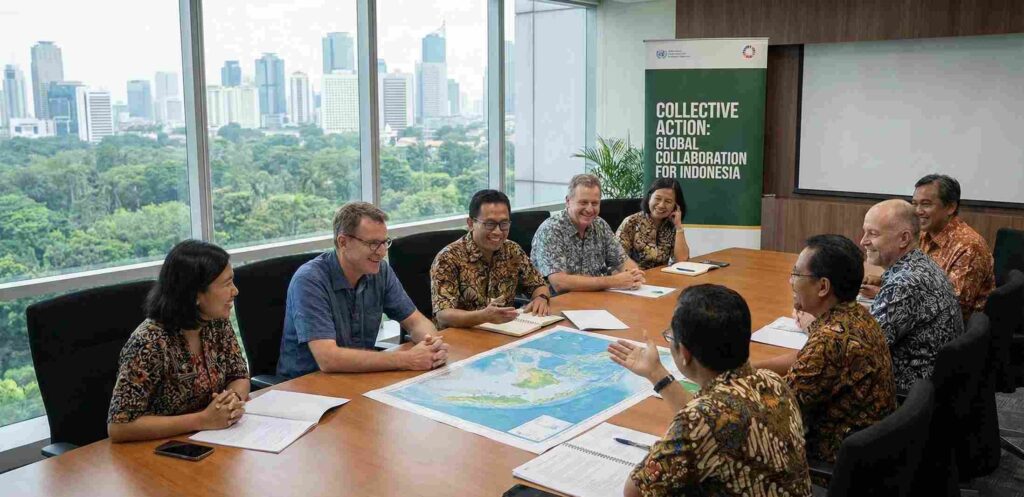
“Energy transition is a collective need. Indonesia cannot work alone.”
Satya’s statement underscores the interconnected nature of global climate goals. Indonesia requires:
- Fair financing models
- Affordable clean technologies
- Cooperative policy frameworks
- Cross-country knowledge sharing
Only through strong international collaboration can Indonesia execute a transition that is environmentally responsible, economically fair, and socially inclusive.
A Balanced Path Toward a Sustainable Future
Indonesia’s energy transition is not simply a technical shift from fossil fuels to renewables. It is a strategic national transformation that involves:
- Protecting energy affordability
- Ensuring power reliability
- Supporting regional development
- Securing fair financial access
- Encouraging global consistency
- Advancing technological readiness
Satya’s insights reinforce the need for a careful, phased transition—one that acknowledges both Indonesia’s climate commitments and the realities faced by its people.
For organizations, professionals, and policymakers seeking deeper understanding, practical strategies, and capacity-building opportunities in energy transition, sustainability, and carbon management:
Join specialized training programs at Mutu Institute.
Our institute offers comprehensive courses designed to strengthen national competencies in renewable energy planning, ESG, sustainable development, and carbon management.
In addition, Mutu Institute operates Carbon Nature, an NGO focused on environmental stewardship, carbon programs, and community-based sustainability initiatives.
Strengthen your organization’s readiness for Indonesia’s energy future.
Partner with Mutu Institute and Carbon Nature to build impactful, sustainable solutions.
Contact us to explore training schedules, collaborative programs, and tailored sustainability services.
Stay connected with us for more insights, updates, and sustainability knowledge. Follow our official channels:
Instagram: carbonature_
YouTube: CarbonNature
Facebook: Carbon Nature
Website: www.carbonnature.com
For training inquiries, partnership opportunities, or direct assistance, contact us at:
Email: info@carbonnature.com
Phone/WhatsApp: 0819-1880-0012
We’re here to support your journey toward stronger sustainability performance and real climate impact.