

Indonesia is ready to lead carbon innovation at the 2025 Carbon Digital Conference (CDC) in Bandung. Learn about the potential of the carbon economy, IDCTA’s role, and regulatory changes for effective climate mitigation.
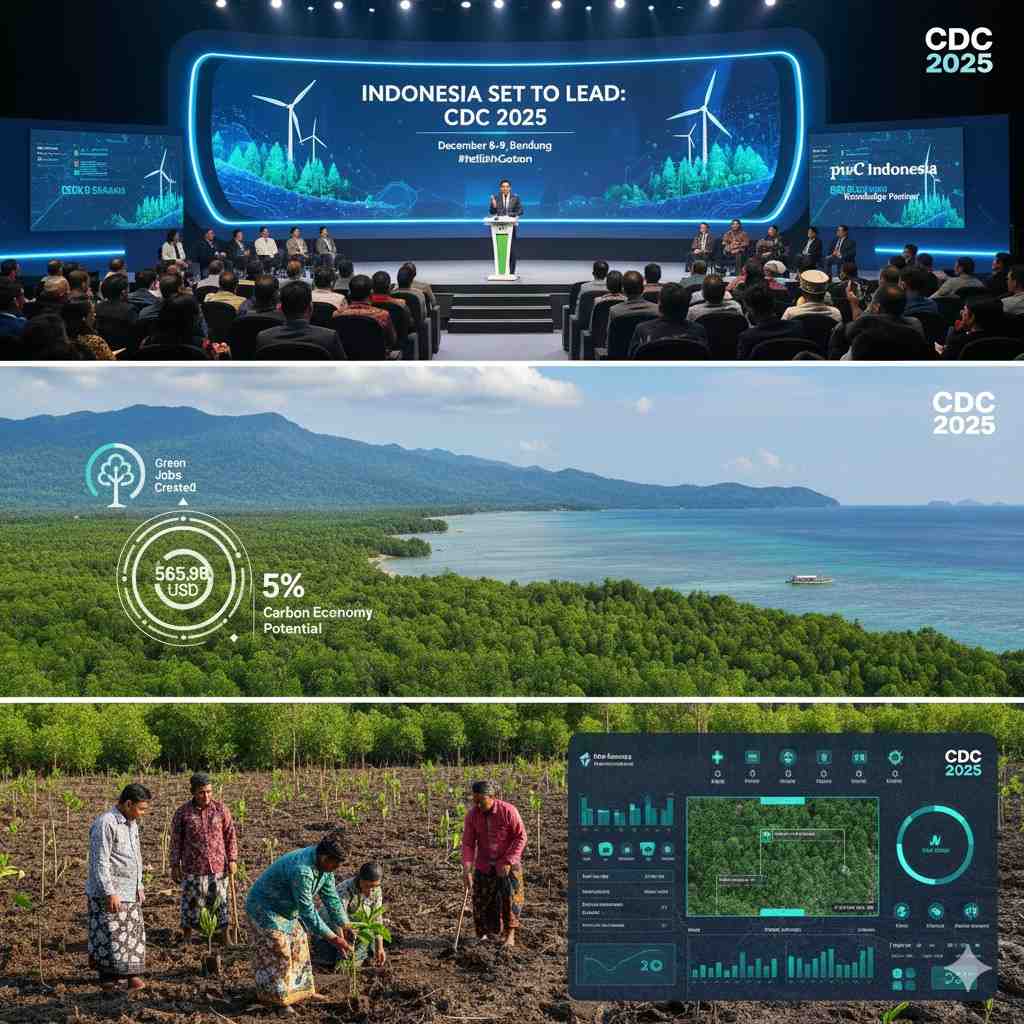
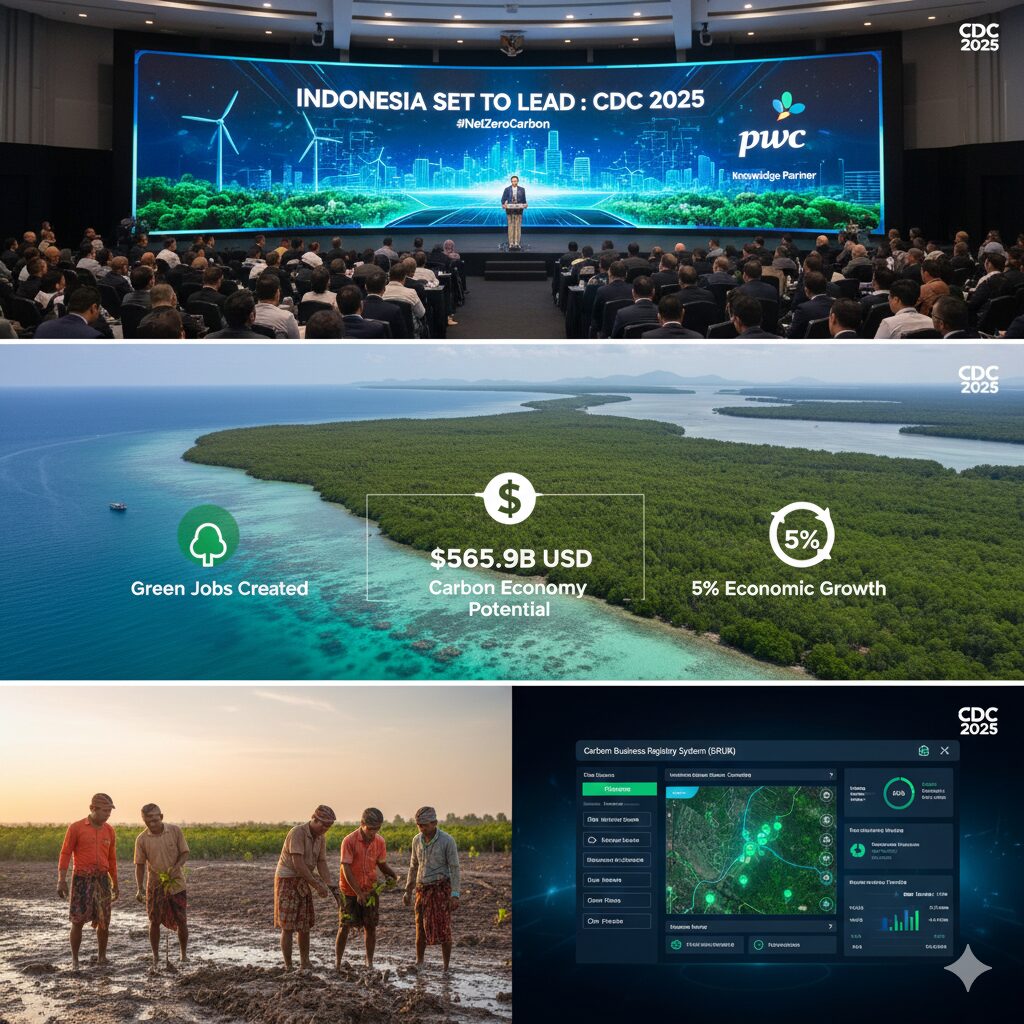
The Carbon Digital Conference (CDC) 2025, a key event focusing on the development of Indonesia’s carbon economy amid efforts to accelerate climate change mitigation, is set to take place again. This conference will be held from December 8-9 in Bandung, West Java, and is expected to serve as a discussion forum for investors, carbon project developers, and technology experts. Participants will explore the application of digital technology in carbon management, including advancements in carbon capture storage (CCS/CCUS) and nature-based solutions, particularly in the Other Land Use (APL) and marine sectors.
Indonesia holds a strategic position in the global carbon market, supported by a carbon economy potential estimated at US$ 565.9 billion. This industry not only contributes to emission reductions but also opens up opportunities for green jobs in various fields, from forest conservation to sustainable agriculture and ecotourism. The conference serves as a platform for climate technology startups to showcase their innovative strengths in the growing green industry, thereby accelerating the achievement of Indonesia’s Nationally Determined Contribution (NDC) and supporting 8% economic growth.
Indonesia’s Strategic Role in the Global Carbon Market
The Chairman of the Indonesia Carbon Trade Association (IDCTA), Riza Suarga, emphasized that CDC 2025 marks a crucial moment for the international carbon market. The event highlights how commitments from developed countries and the international private sector can be realized through innovation. With the theme “Rethinking Indonesia’s Carbon Market: Digital Innovation for Global Integrity,” the conference positions Indonesia as a leader in sustainable carbon credit trading.
As a major manager of tropical rainforests, mangroves, and peatlands, Indonesia plays a vital role in combating climate change. Riza explained that Indonesia’s firm commitment to ensuring all carbon projects are legally valid, verified, and compliant with international standards is essential. This not only helps reduce climate impacts but also promotes sustainable development that integrates social and environmental aspects.
PwC Indonesia’s Contribution as Knowledge Partner
Representing PwC Indonesia as the Knowledge Partner at CDC 2025, Yuliana Sudjonno, PwC Indonesia Partner and Sustainability Leader, stated that addressing climate change requires collective action, integrity, innovation, financing, and commitment to a green economy. Through this event, PwC is committed to ensuring that carbon management in Indonesia meets global standards, creating sustainable social and environmental benefits, and strengthening the integrity of the carbon market.
Yuliana added that the integrity of the carbon market is crucial to prevent unethical practices, such as the trading of unverified carbon credits. With the support of digital technology, verification and emission tracking processes can be carried out more efficiently, allowing Indonesia to serve as a model for other countries in developing a transparent and fair carbon market.
Regulatory Changes in Presidential Regulation 110/2025
One important aspect discussed at CDC 2025 is the major changes in Presidential Regulation No. 110 of 2025. This regulation includes simplifying the carbon trading process, recognizing voluntary carbon markets, and expanding new sectors in carbon trading. These changes aim to make the carbon trading system more accessible and efficient, thus encouraging broader participation from businesses and communities.
IDCTA, as the main association, plays a strategic role in supporting the implementation of this regulation through the government’s dual registry system, namely the National Registry System for Climate Change Control (SRN-PPI) and the Carbon Business Registry System (SRUK). This system serves as a center for managing data and information related to activities and resources that support the implementation and sustainability of climate change control efforts in Indonesia. With this system, transparency and accountability in carbon projects can be enhanced, minimizing fraud risks and ensuring that the economic benefits of carbon are felt by all parties.
Potential and Challenges of Indonesia’s Carbon Market
The potential of Indonesia’s carbon economy is not limited to its financial value reaching hundreds of billions of US dollars, but also to its social impact. This industry can create millions of green jobs, especially in rural areas dependent on natural resources. For example, forest conservation projects can involve local communities in reforestation and ecosystem monitoring activities, while the sustainable agriculture sector can increase productivity without harming the environment.
However, challenges remain, such as the need for advanced technology to monitor carbon emissions in real-time and ensure accurate verification. The CDC 2025 conference is expected to serve as a platform for sharing knowledge and innovative solutions, including the use of AI and big data in carbon management. In this way, Indonesia can accelerate its transition to a low-carbon economy while contributing to global goals like the Paris Agreement.
Conclusion: Towards a Sustainable Future
CDC 2025 is not just an event, but also a symbol of Indonesia’s commitment to leading in carbon innovation. With active participation from various stakeholders, the event can promote international collaboration and strengthen Indonesia’s position as a major player in the global carbon market. Through digital innovation, integrity, and strong regulations, Indonesia is ready to face climate change challenges while building a green and inclusive economy.
In this context, it is important for all parties to continue supporting initiatives like CDC 2025. In this way, climate mitigation efforts will not only be effective but also provide long-term benefits for future generations. Indonesia, with its rich natural resources, has a golden opportunity to set an example for the world in sustainable carbon management.
For institutions interested in organizing similar activities, please contact us via:
WhatsApp at 0819 1880 0012 or follow us on Instagram to see the latest updates.