

The Carbon Market Is No Longer a Future Concept
Carbon Market Readiness – Carbon markets are rapidly shifting from policy discussions into real-world implementation. In Indonesia, regulatory frameworks, pilot projects, and carbon trading initiatives clearly indicate that carbon market mechanisms will become an integral part of environmental governance and business strategy. The key question is no longer whether carbon markets will be implemented, but how prepared organizations are to operate within them.
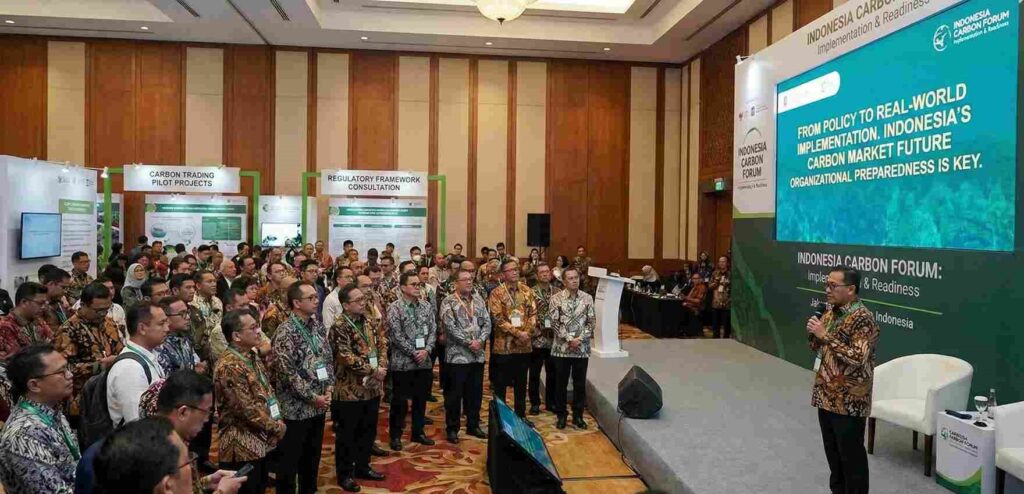
For many organizations, carbon markets are still perceived as a regulatory obligation. In reality, they represent a structural change in how emissions are measured, managed, reported, and monetized. Organizations that prepare early can transform this shift into a strategic advantage, while those that delay risk higher costs, compliance issues, and lost opportunities.
Understanding the Carbon Market and Its Impact on Organizations
A carbon market directly influences how organizations manage emissions, design sustainability strategies, and make long-term business decisions. Participation in a carbon market requires accurate emissions data, transparent reporting, and strict compliance with applicable standards and regulations.
Organizations that are unprepared face several risks:
- Non-compliance with carbon regulations
- Inaccurate emissions calculations
- Financial exposure due to penalties or inefficient carbon credit purchases
- Missed opportunities to generate value from emission reductions
On the other hand, organizations that understand carbon market mechanisms early can position carbon not merely as a cost, but as a strategic asset integrated into operational and financial planning.
Supporting keywords: carbon trading, carbon compliance, sustainability strategy
Carbon Market Readiness Is Not Just About Systems
Many organizations begin their preparation by investing in emissions accounting systems and reporting platforms. While these tools are essential, carbon market readiness does not end with technology.
The most critical challenge lies in the readiness of human resources. Systems are only as effective as the people who operate them. Without sufficient understanding, even well-designed systems can fail.
Common issues include:
- Misinterpretation of carbon regulations
- Incorrect emissions calculation methodologies
- Weak documentation and audit trails
- Inconsistent data collection across business units
This is why carbon market readiness must be approached as a capacity-building process, not a one-time system deployment.
Supporting keywords: carbon management system, emissions reporting
Critical Capability Areas Organizations Must Prepare
To operate effectively within a carbon market, organizations need to strengthen several core capability areas:
1. Fundamental and Advanced Carbon Market Knowledge
Organizations must understand how carbon markets function, including compliance markets, voluntary markets, carbon credits, and offset mechanisms. This foundational knowledge ensures informed decision-making at both operational and strategic levels.
2. Emissions Calculation and Data Management
Accurate greenhouse gas (GHG) accounting is the backbone of carbon markets. This includes selecting appropriate calculation methods, managing activity data, and ensuring data integrity.
3. Monitoring, Reporting, and Verification (MRV)
MRV processes ensure credibility and transparency. Organizations must be prepared for internal reviews, third-party verification, and regulatory audits.
4. Regulatory and Standards Awareness
Carbon market regulations and standards continue to evolve. Staying aligned with national policies, international standards, and market rules is essential to avoid compliance risks.
5. Cross-Functional Coordination
Carbon management is not the responsibility of a single department. Effective coordination between operations, finance, sustainability, and management is critical for consistent implementation.
Supporting keywords: MRV carbon, greenhouse gas accounting, carbon regulation
Why Early Preparation Matters
Organizations that postpone carbon market preparation will face a steeper learning curve once market mechanisms are fully enforced. Reactive approaches often lead to rushed decisions, higher costs, and operational disruption.
In contrast, early preparation provides:
- Time to build internal competence gradually
- Opportunities to refine processes before full implementation
- Better integration of carbon considerations into business strategy
- Stronger positioning when regulations tighten
Carbon market readiness is not achieved overnight. It requires a structured, continuous approach focused on people, processes, and systems.
From Readiness to Competitive Advantage
Carbon markets should not be viewed solely as a compliance burden. For organizations with capable human resources and robust carbon management processes, they offer tangible opportunities:
- Improved risk management
- Cost optimization through efficient emissions reduction
- Enhanced credibility with stakeholders and investors
- Access to new revenue streams from carbon credits or climate projects

This shift—from readiness to advantage—depends largely on how well organizations invest in capacity building.
Keyword focus: carbon market opportunity, carbon risk management
Building Competence Through Structured Training and Support
Strengthening human resource competence is one of the most effective ways to accelerate carbon market readiness. Structured training helps align understanding, reduce errors, and improve implementation quality.
Mutu Institute provides targeted training programs designed to build practical competence in carbon markets, emissions accounting, and MRV processes. These programs are developed to support organizations at different readiness levels, from introductory understanding to advanced implementation.
In addition, organizations seeking broader engagement with climate initiatives can collaborate with Carbon Nature, a non-governmental organization focused on supporting carbon-related projects, community engagement, and nature-based solutions. Through this service, organizations can align carbon strategies with environmental and social impact objectives.
This integrated approach allows organizations not only to comply, but to contribute meaningfully to climate action.
Prepare Today for Tomorrow’s Carbon Market
The carbon market is moving forward, with or without organizational readiness. Those who act early will shape their position in the market, while those who wait will be forced to adapt under pressure.
Investing in carbon market training and capacity building today is a strategic decision that determines tomorrow’s competitiveness.
Join carbon market training programs at Mutu Institute and explore collaborative carbon initiatives through Carbon Nature. Build readiness, reduce risk, and turn carbon challenges into strategic opportunities.
Stay connected with us for more insights, updates, and sustainability knowledge. Follow our official channels:
Instagram: carbonature_
YouTube: CarbonNature
Facebook: Carbon Nature
Website: www.carbonnature.com
For training inquiries, partnership opportunities, or direct assistance, contact us at:
Email: info@carbonnature.com
Phone/WhatsApp: 0819-1880-0012
We’re here to support your journey toward stronger sustainability performance and real climate impact.