

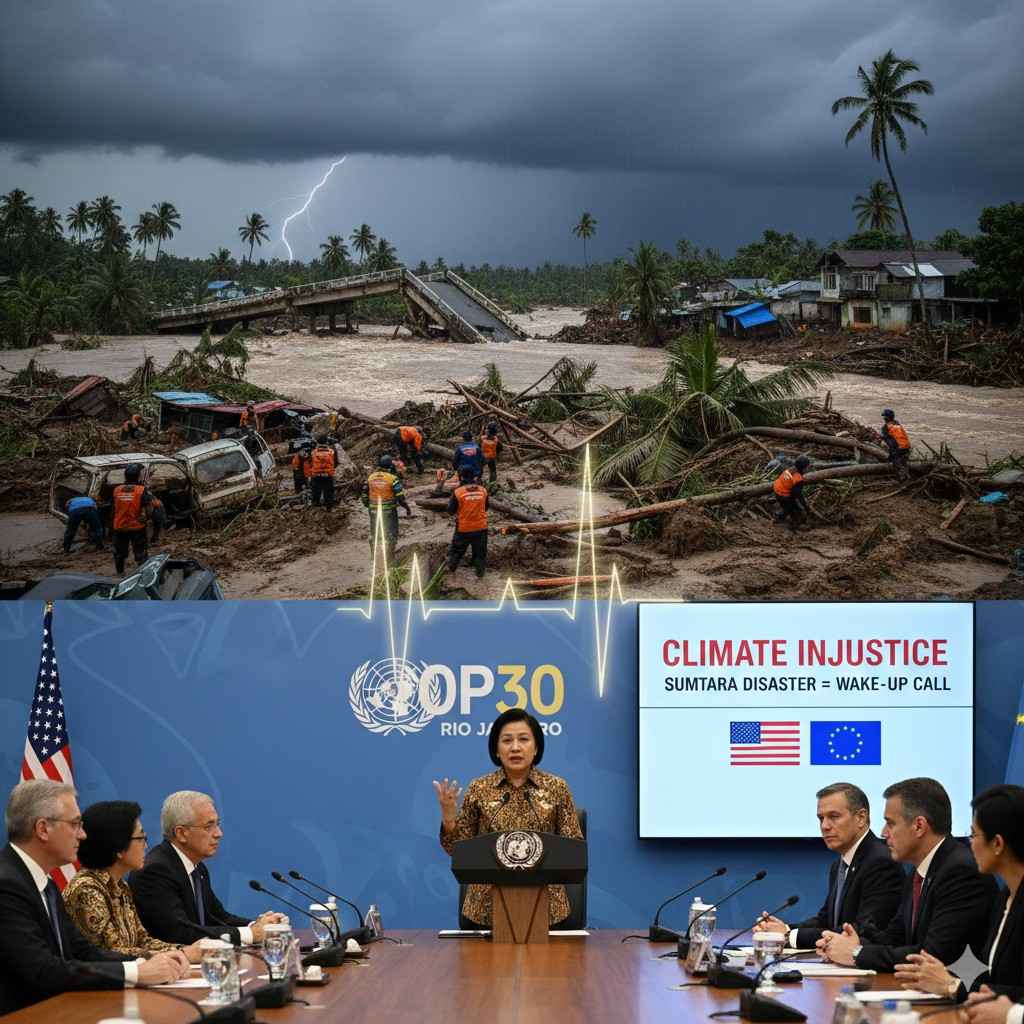
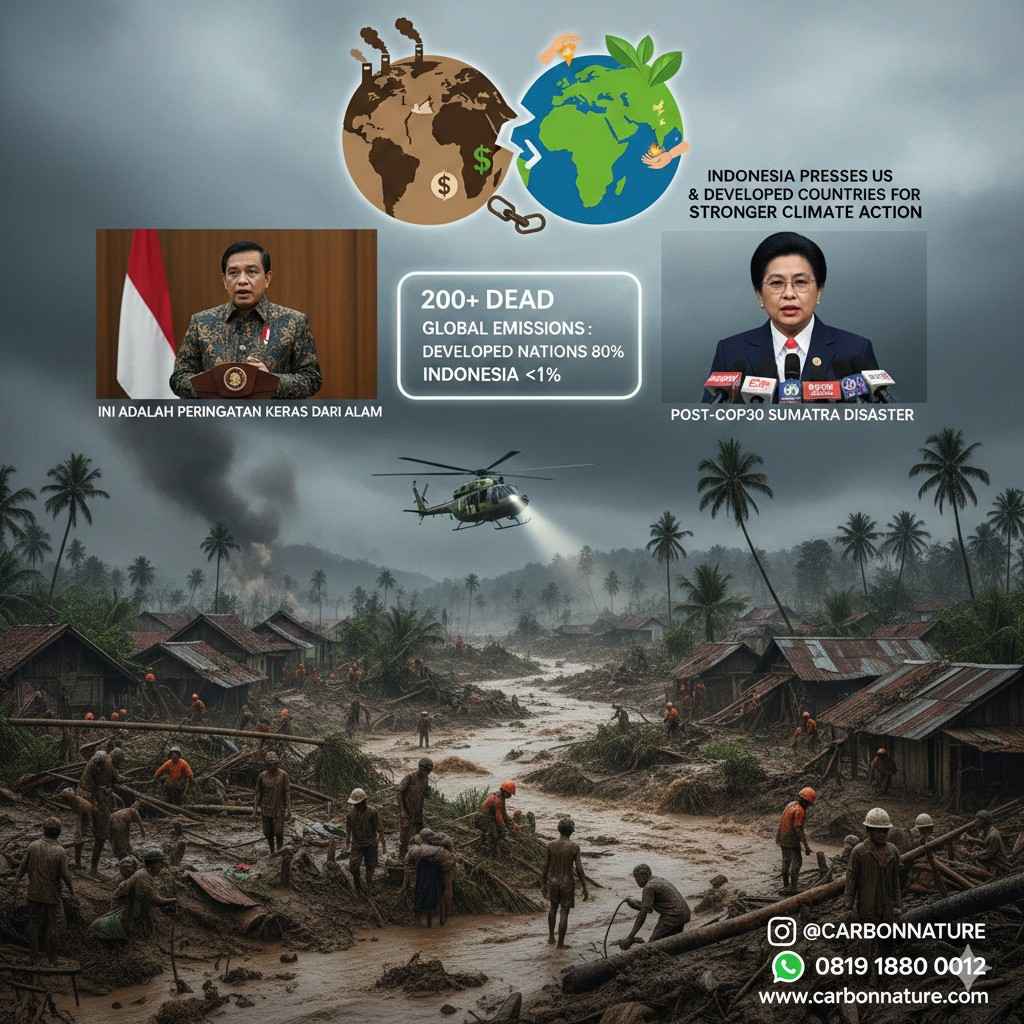
Jakarta, December 15, 2025 – The natural disaster that struck Sumatra Island just days after the closing of the UN Climate Change Conference (COP30) in Rio de Janeiro, Brazil, has become a momentum for Indonesia to strengthen pressure on the United States and other developed countries. Flash floods and landslides triggered by extreme rainfall, exacerbated by climate change, have killed more than 200 people and caused infrastructure damage worth billions of rupiah. This incident occurred just a week after COP30 ended without strong agreements for global emission reductions, according to reports from the National Disaster Management Agency (BNPB).
Disaster Impact and Link to Climate Change
Sumatra, as one of Indonesia’s largest islands, has long been a hotspot for climate-related disasters. In November 2025, heavy rain for days—estimated to be 30% more intense due to global warming—triggered landslides in the Aceh and North Sumatra regions. BNPB reported that more than 50,000 people were displaced, with economic losses reaching Rp 5 trillion. Climate experts from the University of Indonesia emphasized that these extreme weather patterns are consistent with projections from the Intergovernmental Panel on Climate Change (IPCC), where developing countries like Indonesia pay a high price for carbon emissions largely produced by developed nations.
Indonesian President Prabowo Subianto, in his national address, stated that this disaster is a “stern warning” from nature. “We can no longer wait. COP30 failed to provide concrete commitments from developed countries to fund clean energy transitions in developing nations,” he said. Indonesia, as an archipelagic nation with 17,000 islands, has contributed less than 1% to global emissions, yet suffers the greatest impacts from rising sea levels and tropical storms.
Indonesia’s Diplomatic Momentum
Post-COP30, Indonesia is using this momentum to push the international agenda. Foreign Minister Retno Marsudi has held emergency meetings with US and EU delegations, demanding increased financial and technological assistance for climate mitigation. “The United States, as the largest emitter in history, must lead in reducing emissions by 50% by 2030, not just 40% as promised at COP30,” Retno said in a press conference.
Indonesia refers to the principle of “common but differentiated responsibilities” in the Paris Agreement, which requires developed countries to provide financial support to developing nations. At COP30, developed countries committed to providing $100 billion annually for climate funds, but implementation is still far from the target. The Sumatra disaster, according to analysts from the World Resources Institute, shows that without swift action, global economic losses from climate disasters could reach $23 trillion per year by 2050.
International Response and Future Challenges
The United States, through a White House spokesperson, expressed readiness to increase aid, including through USAID, which has allocated $50 million for Sumatra’s recovery. However, criticism comes from environmental groups like Greenpeace, which called the US commitments “empty promises” without significant domestic emission reductions. European developed countries, such as Germany and France, have promised technical support, but Indonesia emphasizes the need for stricter enforcement mechanisms.
Experts warn that disasters like this could recur without change. Indonesia plans to submit a new proposal at COP31 for a “Climate Solidarity Fund” specifically for vulnerable countries like Indonesia, the Philippines, and Bangladesh. With a population of 270 million, Indonesia is ready to be the voice of developing countries in pushing for global climate action.
The Sumatra disaster post-COP30 is not just a national tragedy, but also a call for international solidarity. Will America and its allies respond with real action, or will this disaster become another bitter memory? Time will tell. (Sources: BNPB, IPCC, and international media reports)
For institutions interested in organizing similar activities, please contact us via:
WhatsApp at 0819 1880 0012 or follow us on Instagram to see the latest updates.