

Indonesia is actively forming international coalitions to cut greenhouse gas emissions, even as COP30 results fall short. Focus on climate diplomacy, peatland management, and academics’ role in climate adaptation.
Minister of Environment and Forestry, Hanif Faisol Nurofiq, reaffirms Indonesia’s commitment to lowering greenhouse gas emissions through diplomacy and international coalitions, despite the suboptimal outcomes of COP30.
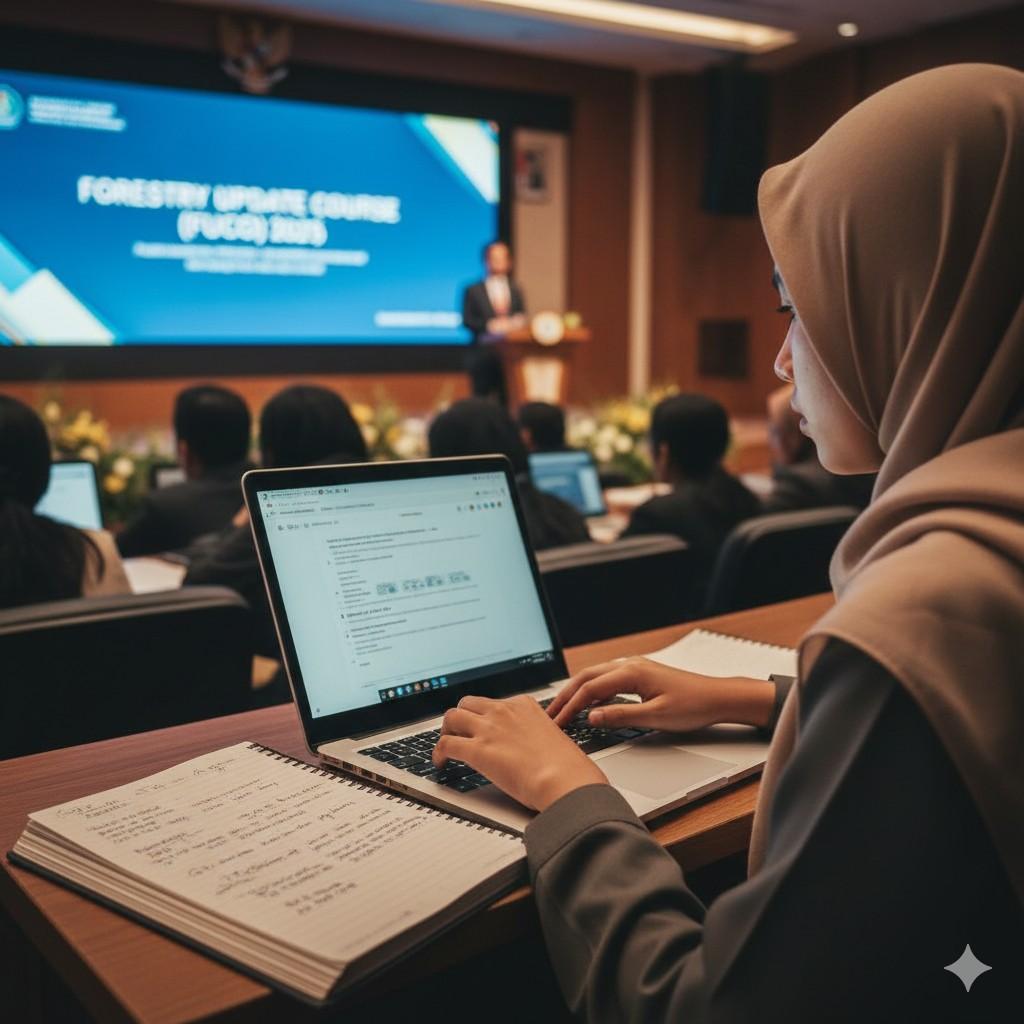
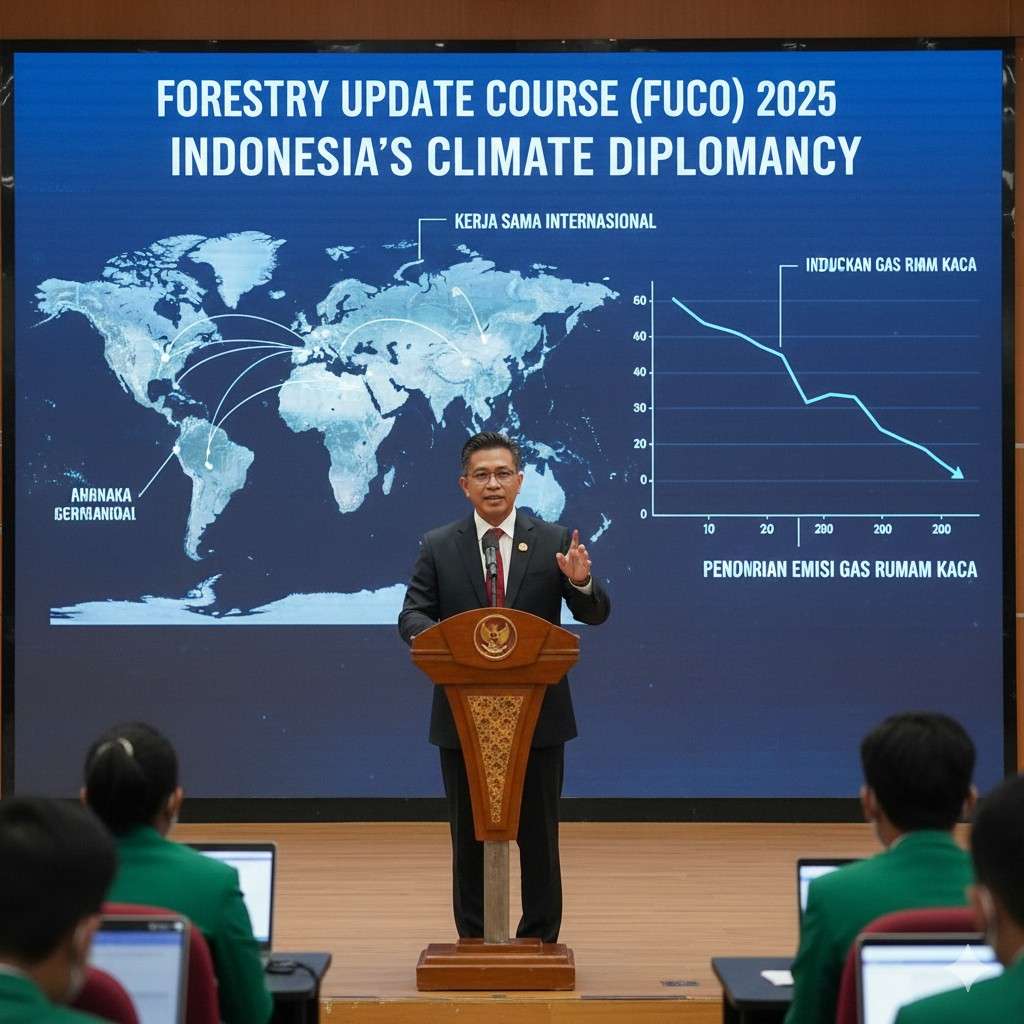
In a public lecture titled Forestry Update Course (Fuco) 2025 at the Universitas Lambung Mangkurat (ULM) Auditorium in Banjarbaru on Saturday, Hanif explained that Indonesia is actively forming global partnerships. This initiative aims to significantly cut down on carbon emissions. He highlighted Indonesia’s leadership as a nation with strategic ecosystems, demonstrated through bilateral diplomacy and coalition efforts.
These steps are a response to the urgent issues of global warming and climate change. Although the COP30 in Belem, Brazil, from November 10-21, 2025, was deemed less than satisfactory, Indonesia continues to strengthen climate adaptation implementation. This commitment aligns with the 2015 Paris Agreement.
Climate Diplomacy and Indonesia’s Global Commitments
Minister Hanif recently returned from the COP30 Leaders Summit in Brazil. He noted that the conference’s results were unsatisfactory, prompting Indonesia to pursue tangible actions to bolster climate adaptation.
Indonesia has prepared various instruments to reduce greenhouse gas emissions, in line with commitments under the Paris Agreement. This reflects the country’s seriousness in tackling climate challenges, contributing to global efforts expected to yield positive impacts.
In climate diplomacy, Indonesia has partnered with developed nations like Japan and Norway. These bilateral partnerships are hoped to serve as examples amid global uncertainties. Hanif emphasized that progress doesn’t always require large consensuses; strengthening bilateral ties can also lead to agreed-upon outcomes.
Emission Mitigation Through Peat Ecosystems
One of Indonesia’s main focuses is mitigation in the forestry sector, particularly through peatland management. Keeping peatlands healthy and wet is a crucial strategy, as wet peat can absorb vast amounts of carbon.
Conversely, dry or burned peat can become a major source of greenhouse gas emissions. Indonesia holds the world’s second-largest peatland area, spanning 13.3 million hectares, underscoring its role in carbon sequestration.
Carbon reserves in Indonesia’s peatlands are estimated at 55-57 gigatons, equivalent to about 30 percent of the global total. With such potential, peat management is vital for emission reduction goals.
Minister Hanif stated that with a target to reduce emissions by 1.2 to 1.5 gigatons of CO2 equivalent by 2035, preserving peat ecosystems alone could address climate threats. This shows that concentrating on one key sector can have a significant impact on national targets.
Role of Academics in Climate Action
Minister Hanif also urged the academic community at Universitas Lambung Mangkurat (ULM) to play an active role in combating climate change. This can be achieved through applied research, monitoring innovations, and hydrological modeling.
Additionally, community service based on partnerships is a key contribution path. ULM Rector, Prof. Ahmad Alim Bachri, welcomed the message. As an alumnus of ULM’s Faculty of Forestry, Hanif’s presence is expected to inspire students.
This enthusiasm is hoped to encourage students to participate in national efforts to restore peatlands for Indonesia’s future climate. Dean of the Faculty of Forestry at ULM, Kissinger, noted that the lecture was attended by 1,800 ULM students from various faculties, plus 300 students from other universities online. This broad participation highlights high awareness among young academics about climate issues.
Interested in becoming part of Indonesia’s carbon transition?
Join Mutu Institute’s Carbon Market and Sustainability Training Programs to master the tools and standards driving today’s green economy.
Learn more about our NGO initiative Carbon Nature, supporting real action for conservation, climate justice, and carbon awareness.
Visit: www.mutuinstitute.com & www.carbbonnature.com